
Aug 9, 2017
0
Aug 9, 2017

read more
National Museum
The National Museum of Cambodia in Phnom Penh is the country’s leading historical and archaeological museum. It was officially inaugurated by King Sisowat in 1920.

The buildings are inspired by Khmer temple architecture and house more than 14,000 items. The National Museum contains the world’s largest collection of Khmer art, including sculpture, ceramics, bronzes, and ethnographic objects dating from prehistoric times to periods before, during, and after the Khmer Empire.
The Museum also serves a religious function. Its collection of important Buddhist and Hindu sculptures includes a Post-Angkorian Buddha supported by UNESCO.
0
 Along with numerous other
interesting buildings within the 183,135 square meters (421m x 435m) compound
is The Khemarin Palace, also known as Prasat Khemarin or the "Palace of
the Khmer King." This is officially the residence of His Majesty, King
Norodom Sihamoni.
Along with numerous other
interesting buildings within the 183,135 square meters (421m x 435m) compound
is The Khemarin Palace, also known as Prasat Khemarin or the "Palace of
the Khmer King." This is officially the residence of His Majesty, King
Norodom Sihamoni.
read more
Royal Palace of Cambodia
The Royal Palace of Cambodia is a complex of buildings, even though it
is generally understood to be the royal abode of the King of Cambodia. The
compound was the citadel of King Ponhea Yat (1393-1463) and rebuilt to its
present state in 1886, when King Norodom (1834-1904) relocated the royal
capital from Oudong to Phnom Penh. The buildings with beautiful towering spires
are a great example of classic Khmer architecture found in Cambodia today.
 Along with numerous other
interesting buildings within the 183,135 square meters (421m x 435m) compound
is The Khemarin Palace, also known as Prasat Khemarin or the "Palace of
the Khmer King." This is officially the residence of His Majesty, King
Norodom Sihamoni.
Along with numerous other
interesting buildings within the 183,135 square meters (421m x 435m) compound
is The Khemarin Palace, also known as Prasat Khemarin or the "Palace of
the Khmer King." This is officially the residence of His Majesty, King
Norodom Sihamoni.
Inside the palace grounds, the
noises from the street are silenced by the high walls surrounding the compound.
While tourists cannot enter the area of the royal abode, visitors can gain
entry to the Throne Hall (Preah Tineang Tevea Vinichhay) where coronations and
official ceremonies take place, the Temple of the Emerald Buddha (Wat Preah Keo
Morakot), Stupas (Chedei), a Royal Dining Hall, the Chan Chhaya Pavilion and a
French-style building that was a gift from Napoleon III.
0
 Today, Phnom Penh is
a place of diverse economic and urban growth. A swift wave of development has
brought in new highrise buildings--including a 30-storey business
center--restaurants catering to every palate, and stylish hotels promising all
levels of luxury. Contributing to this development are burgeoning culinary and
nightlife scenes that can rival any other in the region.
Today, Phnom Penh is
a place of diverse economic and urban growth. A swift wave of development has
brought in new highrise buildings--including a 30-storey business
center--restaurants catering to every palate, and stylish hotels promising all
levels of luxury. Contributing to this development are burgeoning culinary and
nightlife scenes that can rival any other in the region.
Around Phnom Penh
read more
Phnom Penh, the capital city
Phnom Penh, once known as the ‘Pearl of Asia’, is the capital
and largest city in Cambodia. It is now a cultural, commercial, and
political center that offers a unique blend of traditional charm and urban
bustle.
 Today, Phnom Penh is
a place of diverse economic and urban growth. A swift wave of development has
brought in new highrise buildings--including a 30-storey business
center--restaurants catering to every palate, and stylish hotels promising all
levels of luxury. Contributing to this development are burgeoning culinary and
nightlife scenes that can rival any other in the region.
Today, Phnom Penh is
a place of diverse economic and urban growth. A swift wave of development has
brought in new highrise buildings--including a 30-storey business
center--restaurants catering to every palate, and stylish hotels promising all
levels of luxury. Contributing to this development are burgeoning culinary and
nightlife scenes that can rival any other in the region.
The alluring capital city also features a wide
variety of historical and cultural attractions, along with myriad opportunities
to sample local Cambodian culture. Here, classic colonial facades endure
alongside sleek new eateries, golden-spired pagodas, and buzzing markets-- all
evidence of the dynamic energy of Phnom Penh's city streets.
Phnom Penh's famous riverfront is lined with
trendy pubs, bistros, and restaurants. Stores offering beautiful Cambodian silk
products and chic galleries dot the side streets. Add to this a blooming arts
scene and a heady dusk-to-dawn nightlife and you'll understand why Phnom Penh
has become such a well-loved and compelling tourist destination.
Around Phnom Penh
The vibrant streets of Phnom Penh are full
of colorful sights. The city possesses an exciting range of historical and
cultural attractions to tout, along with countless restaurants and nightspots.
 |
| Royal Palace |
For a taste of Cambodian history and royal life, visitors can
tour the Royal Palace and the Silver Pagoda located just next to the palace
grounds. A short walk away, the National Museum beckons with room after room of
Khmer sculpture, ceramics, bronzes, and ethnographic objects. To get a taste of
city life, visitors can walk along Sothearos Boulevard, sampling local foods
and patronising a clutch of ‘antique’ shops that sell silver trays, betel
boxes, belts, ancient coins, silver or wooden statuettes and famed marble
carvings from the province of Pursat.
Visitors may also find it pleasant to take leisurely strolls
around Phnom Penh. Boulevards peppered by elegant colonial buildings
and a bustling riverfront lined with cafes and restaurants make this a truly
beautiful city to see on foot.
For those interested in shopping, ‘Phsar Toul
Tum Poung’ also known as Russian Market offers antique pieces, sundry sounvenir
items, and factory over-run designer clothing at hugely discounted prices.
Visitors who prefer air-conditioned comfort may opt to stop in the city's
modern shopping complexes (Sorya Shopping Centre, Sovanna Centre and the City
Mall).
A sunset cruise down Phnom Penh's Tonle Sap
river serves as a perfect, relaxing end to an activity-filled day. Catch the
soft river breezes and watch as Cambodia's capital begins to light up and
shimmer for the evening.
Region
|
:
|
Central
|
Area
|
:
|
375 Km2
|
Total Districts
|
:
|
8
|
Total Communes
|
:
|
76
|
Oct 7, 2011
0
Oct 7, 2011
Living In Cambdia
Insurance:
read more
- Foreigners must pay for insurance by themselves such as on houses, cars and health (Annually).
- Employment No any foreigner can perform any kind of business without work permit and record issued by the Ministry of Labor and Vocational Training. Foreigners who intend to work must meet the following conditions:
A.Receive before hand work permit in order to engage in any job activity in Cambodia;
B.Enter Cambodia legally;
C.Hold proper passport;
D.Hold proper stay permit;
E.Possess appropriate physical conditions for jobs and contact no serious pandemic disease;
Ministry of Labor and Vocational Training can withdraw work permit in the following conditions:
A.The holders fail to comply with the 5 points above;
B.Jobs have been postponed by holders of work permit. This withdrawal would apply up on the expiry date of work permit and can be issued or extended to foreigners;
C.Holders of work permit are not employed over a month or work for other employers.

Maximum percentage of foreign employment Referring to the requests by owners or heads of enterprises, in general, the Ministry of Labor and Vocational Training allows employing foreign workers not more than 10 per cent of the total local employees.
The 10 % of foreign workers is categorized as below:

B.Specialist: 6%
C.Labor worker: 1%
- In case that the need of foreign employment exceeds 10%, it shall be
clarified the position, specialty of each foreigner to be hired as well
as the reasons for employment.
- Place to stay, type of home, price, location etc. - First is main street location in which the price of new and old building is between 200 USD to 300 USD/m2, (Residential area: 600 USD) and land price 2,000 USD/m2;
- Tax duties for foreigners + Foreigners work for others
- Media for foreigners and tourists - The Ministry of Tourism has hosted their website: www.mot.gov.kh E-mail: admin@mot.gov.kh/guide and announced through national and international radio stations, newspapers at all places exposed to tourists and produced brochures for tourists.
- Embassy : please click here to locate all embassies on the City Map
- Education for foreigners in Cambodia - Cambodian-Oversea
- Second is narrow street location in which the price of new and old building is between 150 USD to 250 USD/m2, (Residential area: 600 USD) and land price: 1,500 USD/m2
- Third is land Street location in which the land price is between 100 USD to 400 USD/m2.

- Come to live and do business (Tax on business only);
- Work as General Manager shall pay ordinary salary tax according to tax law (salary tax excluding children tax);
- Work as General Manager for 182 days shall pay ordinary tax according to tax law (Tax rate: 20%),
- Renting accommodation shall pay additional benefit tax 20% (The real estate company shall pay 20%, and foreigners who rend the house are duty free.
+ Foreigners own business
- Work as contractor at Khans or small markets (Sell in small markets);
- Do and registered business tax,
- Own business shall pay additional benefit tax;
- Profit tax (Monthly profit tax);
- Register VAT shall pay VAT tax (except for banks and insurance company);

- Withhold tax;
- Patent tax (Every half of the year or annually);
- Stamp tax;
- Advertising Sign board tax;
- Accommodation tax (Hotel);
- Means of Transportation tax (Annually by owners);
- Public lighting tax (Alcoholic drinks, cigarettes);
- Special tax (Import tax including beer producing);
- Letter Stamp tax (Sending letters locally or abroad);
- Buying apartment tax (Room), pay stamp tax.
- Transportation (Requirement to get driver license) - Foreigners who live in Cambodia for more than 6 months are eligible to apply for driver license;
- Leisure Activities
- Foreigners who already hold international driver license of heavy trucks may apply to switch to light vehicle driver license.

1. Historical and Cultural Tourism:
- National Museum, Temples, Independent Monument, Wat Phnom;
- Choeung Ek Genocide Center, Toul Sleng Musuem;
- Royal Ploughing ceremony, Khmer New Year, Pchum Ben, Water Festival;
- 2. Natural Tourism
- Cruising along Tonle Sap and Mekong River, fishing watch;
- 3. Sport Tourism
- Play golf at the standard quality golf courses such as Grand Phnom Penh, Royal Cambodia Golf Course
-Tennis, Soccer, Badminton, etc.
- 4. Recreation
- Health Emergency - 7 public hospitals: Calmette, Angdoung, Phreah Kosomeak, Cambodia-Soviet, National Pediatrics, Kontheak Bopha, Maternal and infant Support Center.
- Popular park such as Samdech HunSen Park, Independent Monument Park, Royal Palace Park, Park in front of CDC etc.
- At night, you can visit the Night Market, walk along the river park etc.
- 103 private clinics
- Banks and Transferring
- - Money exchange, transfer and deposit are available through state and private banks.
Jul 1, 2011
0
Jul 1, 2011
Increasing Chinese Visitors to The Kingdom
During the world economic crisis, due to the slowing down of western tourists, the tourism industry in the Kingdom was badly affected and led to temporarily laying off employees like the case of Allison Angkor Hotel.
This year the growth of Chinese visitors bring back to good situation for tourism industry. China is the second market among the top 5 outside ASEAN that come to visit Cambodia. Chinese visitors jumped 33.5% to 99,531 during the first 5 months in 2011 compared with the same period in 2010. Most Chinese target only Siem Reap while they think that the environment in Phnom Penh is similar to some Chinese cities. According to Tourism Minister H.E Thong Khon, the Kingdom projected to see the 200,000 of Chinese investors in 2011 (See PPS’s Tourism Report in Cambodia). Good communication with Chinese tour operators is a good benefit for hotel business since Chinese people tend to go to rest at hotels with Chinese speaking people.
Mainland China is not only the largest market for agricultural products but also for tourism sector. Anyway, it is estimated that in less than 15 years’ time, China will be producing around 100 million tourists.
read more
This year the growth of Chinese visitors bring back to good situation for tourism industry. China is the second market among the top 5 outside ASEAN that come to visit Cambodia. Chinese visitors jumped 33.5% to 99,531 during the first 5 months in 2011 compared with the same period in 2010. Most Chinese target only Siem Reap while they think that the environment in Phnom Penh is similar to some Chinese cities. According to Tourism Minister H.E Thong Khon, the Kingdom projected to see the 200,000 of Chinese investors in 2011 (See PPS’s Tourism Report in Cambodia). Good communication with Chinese tour operators is a good benefit for hotel business since Chinese people tend to go to rest at hotels with Chinese speaking people.
Mainland China is not only the largest market for agricultural products but also for tourism sector. Anyway, it is estimated that in less than 15 years’ time, China will be producing around 100 million tourists.
Apr 22, 2011
0
Apr 22, 2011

 2. Pacific Ocean Hawaii
Aloha! Scanning westward we approach the Hawaiian Islands. The Big Island is clearly visible. Kilauea is sometimes called “the world’s only drive-in volcano.” This prolific volcano currently produces 250,000-650,000 cubic yards of lava per day, enough to resurface a 20-mile-long, two-lane road daily. Image: NASA/ESA

 4. East coast of Spain at Night
Looking southward on to the east coast of Spain, at night, with the Balearic sea as a dark cloak. The Island of Mallorca is visible on the top left. With Barcelona’s bright lights behind some clouds, I’m reminded about my own bucket list. One day I want to go there to see FC Barcelona face Real Madrid. Soccer might not be huge in the US but it is by far the leading sport in the rest of the world.
Image Credit: NASA/ESA
 5. Manam Volcano, Papua New Guinea
Manam or “the Green Volcano” as I’d like to call it, is just 10 kilometers (6 miles) across. Manam is a stratovolcano, composed of alternating layers of ash, lava, and rocks from prior eruptions. Manam is one of Papua New Guinea’s most active volcanoes, and it has occasionally caused casualties, including 13 deaths from a pyroclastic flow in December 1996, and four deaths from a mudflow in March 2007. On a happier note, this image looks like a perfect movie set (Jurassic Park or King Kong comes to mind).
Image Credit: NASA/ESA
 6. Sunset reflection in the Caspian Sea
The Caspian Sea is the largest enclosed body of water on Earth by area, variously classed as the world’s largest lake or sea. The sea has a surface area of 371,000 km2 (143,200 sq mi). I decided to end my article with this magnificent shot. Our planet is pure gold. Cherish it, it’s the only one we got.
Image Credit: NASA/ESA
read more
The Most Beautifule Planets

1. Indean Ocean Maldives
“The sunny side of life” is a catchphrase used to attract tourists to the Maldive Islands. Well it certainly looks heavenly from the ISS. Time to order a large drink, you know, one with a lot of fruit and a little umbrella, then stretch out on a hammock and just enjoy life, watching what I can only imagine a marvelous sunset. Image Credit: NASA/ESA  2. Pacific Ocean Hawaii
Aloha! Scanning westward we approach the Hawaiian Islands. The Big Island is clearly visible. Kilauea is sometimes called “the world’s only drive-in volcano.” This prolific volcano currently produces 250,000-650,000 cubic yards of lava per day, enough to resurface a 20-mile-long, two-lane road daily. Image: NASA/ESA

3. Aurora Australis, New Zealand
I do not think I have ever seen the Aurora from inside the Aurora itself. This images is awesome on so many levels. It reminds me of a laser show by Jean Michel Jarre – secretive and mysterious. Image: NASA/ESA
Looking southward on to the east coast of Spain, at night, with the Balearic sea as a dark cloak. The Island of Mallorca is visible on the top left. With Barcelona’s bright lights behind some clouds, I’m reminded about my own bucket list. One day I want to go there to see FC Barcelona face Real Madrid. Soccer might not be huge in the US but it is by far the leading sport in the rest of the world.
Image Credit: NASA/ESA

Manam or “the Green Volcano” as I’d like to call it, is just 10 kilometers (6 miles) across. Manam is a stratovolcano, composed of alternating layers of ash, lava, and rocks from prior eruptions. Manam is one of Papua New Guinea’s most active volcanoes, and it has occasionally caused casualties, including 13 deaths from a pyroclastic flow in December 1996, and four deaths from a mudflow in March 2007. On a happier note, this image looks like a perfect movie set (Jurassic Park or King Kong comes to mind).
Image Credit: NASA/ESA

The Caspian Sea is the largest enclosed body of water on Earth by area, variously classed as the world’s largest lake or sea. The sea has a surface area of 371,000 km2 (143,200 sq mi). I decided to end my article with this magnificent shot. Our planet is pure gold. Cherish it, it’s the only one we got.
Image Credit: NASA/ESA
Apr 18, 2011
0
Apr 18, 2011
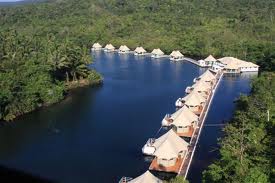
 The 4 Rivers Floating Eco-Lodge is located in Tatai, Koh Kong Province, one of the most beautiful places in Cambodia. According to the western owners, it is the first of its kind in the world, as it features luxury tents on completely floating platforms (not on solid poles).
The resort was opened on 20 November 2009 with 6 tents, together with the main platform featuring the restaurant and the crew area. When entirely up and running (February 2010), the resort will feature 18 luxury tents and more than 3,000sqm of floating surface.
The owners chose to open the resort in Koh Kong Province because of its untouched environment, and also for the opportunity of being one of the first medium-sized tourism sector investments in the area. The $1.5 million investment is entirely western. The 4 Rivers Floating Eco-Lodge offers remote luxury and peaceful seclusion in the midst of pristine nature, without leaving any environmental footprint. The lush forested slopes of the Cardamoms are a perfect hiding place for the rare Javan rhinoceros, Indochinese tiger and Asian elephant. Gibbons sometimes serenade at sunrise and barking deer yelp at the edge of the jungle. Siamese crocodiles, once thought extinct, have also been seen in the rivers that criss-cross this magical haven.
  According to the Wildlife Alliance, World Wildlife Fund and other concerned charities, this remarkable rainforest eco-region is considered to harbour more than 100 mammal species including numerous endangered animals such as the clouded leopard, pileated gibbon and Malaysian sun bear. The nature and wildlife reserve near Nengkok village is also reputed to be the best of its kind in Cambodia. More info: www.ecolodges.asia
The Ministry of Foreign Affairs and International Cooperation has launched e-Visa, which enables you to apply for a Cambodia tourist visa online. Instead of applying through Cambodian Embassy, all you need to do is to complete the online application form and pay with your credit card. After receiving your Visa through email, print it out and bring it along when you travel to Cambodia. For those who wish to apply Business Visa, K-Visa or Diplomatic Visa, please contact your nearest Cambodian Embassy for more information. The Ministry of Foreign Affairs and International Cooperation is unable to accept applications from holders of Diplomatic Passports.
Entry Type: Single entry only Fees: USD20 + USD5 (processing charge) Validity: 3 months (starting from the date of issue) Length of Stay: 30 days (more) Processing Time: 3 business days Requirement: A passport validity of more than six months balance at time of entry, a recent passport-size photo in digital format (JPEG or PNG format), a valid credit card (Visa/MasterCard/American Express/Discover). Visa Exemption: Laos, Malaysia, Philippines, Singapore, Vietnam Countries not supported: Afghanistan, Algeria, Arab Saudi, Bangladesh, Iran, Iraq, Pakistan, Sri Lanka, Sudan (Please apply your Visa from your nearest embassy or on-arrival at all major checkpoints) Click here to apply
read more
Fees: USD20 + USD5 (processing charge) Validity: 3 months (starting from the date of issue) Length of Stay: 30 days (more) Processing Time: 3 business days Requirement: A passport validity of more than six months balance at time of entry, a recent passport-size photo in digital format (JPEG or PNG format), a valid credit card (Visa/MasterCard/American Express/Discover). Visa Exemption: Laos, Malaysia, Philippines, Singapore, Vietnam Countries not supported: Afghanistan, Algeria, Arab Saudi, Bangladesh, Iran, Iraq, Pakistan, Sri Lanka, Sudan (Please apply your Visa from your nearest embassy or on-arrival at all major checkpoints) Click here to apply
read more
4 Rivers Floating Eco-Lodge

The resort was opened on 20 November 2009 with 6 tents, together with the main platform featuring the restaurant and the crew area. When entirely up and running (February 2010), the resort will feature 18 luxury tents and more than 3,000sqm of floating surface.
The owners chose to open the resort in Koh Kong Province because of its untouched environment, and also for the opportunity of being one of the first medium-sized tourism sector investments in the area. The $1.5 million investment is entirely western.
 According to the Wildlife Alliance, World Wildlife Fund and other concerned charities, this remarkable rainforest eco-region is considered to harbour more than 100 mammal species including numerous endangered animals such as the clouded leopard, pileated gibbon and Malaysian sun bear. The nature and wildlife reserve near Nengkok village is also reputed to be the best of its kind in Cambodia. More info: www.ecolodges.asia
E-Visa
Entry Type: Single entry only
Fees: USD20 + USD5 (processing charge) Validity: 3 months (starting from the date of issue) Length of Stay: 30 days (more) Processing Time: 3 business days Requirement: A passport validity of more than six months balance at time of entry, a recent passport-size photo in digital format (JPEG or PNG format), a valid credit card (Visa/MasterCard/American Express/Discover). Visa Exemption: Laos, Malaysia, Philippines, Singapore, Vietnam Countries not supported: Afghanistan, Algeria, Arab Saudi, Bangladesh, Iran, Iraq, Pakistan, Sri Lanka, Sudan (Please apply your Visa from your nearest embassy or on-arrival at all major checkpoints) Click here to applyApr 12, 2011
0
Apr 12, 2011
read more
Tourism in Cambodia
Cambodia is fortunate to inherit great historical and cultural heritages especially Angkor Wat Temple and a beautiful natural environment along the mountain ranges, forests, lakes, seashore and offshore islands. Tourism continues to blossom contributing to the development of the service sector. Tourism sector in Cambodia is so attractive for investment thanks to the diversity of historical and cultural heritages, natural cultural parks such as forests, lakes, seashores and beautiful and attractive landscapes. Tourist arrivals have increased from 170,000 in 1993 to more than 2 millions in 2008. Indeed, the great potential of tourism sector will play the key role in linking production and services in hotel and hospitality sector with demand for other goods. One the most attractive unspoilt Tourism markets in the Region :
Cambodia has focused on the development of tourism in the following sites :
- Culture: Angkor Complex of Temples
- Located at a few kilometres northwest of Siem Reap, there are about 40 accessible sites with the temples having a legacy extending over many centuries (circa AD800-1400)
- The Angkor complexes are on the UNESCO’s list of World Heritage Sites
- Preservation and restoration work is being coordinated by an international coordinating committee co-chaired by France and Japan, with the Cambodian counterpart being the Aspara Authority
- Coastal:
- Beaches and islands in Sihanoukville and Kampot provinces
- Development of Sihanoukville including the construction of the country's third international airport
- Business and Government: Phnom Penh and surrounding areas
- Eco-tourism in the North East:
- Kratie, Mondulkiri, Rotanakiri and Steung Treng
- The growth in tourism has been robust and is a strong contributor to the services sector
- GDP of the services sectors grew at an average of 8.6% over the 2000-2005 period
- The number of tourists increased by 35% in 2005 relative to the year before
- Tourists from the Republic of Korea ranked first in terms of tourist arrivals, more than 50% of total tourist arrivals to Cambodia are from the Asian and Pacific countries, and about a quarter of the tourist arrivals are from the Europe
- Good balance between regional short-haul tourism (tourists who come more frequently but for shorter periods) and long-haul tourism (tourists who come less frequently for longer periods)
Subscribe to:
Posts (Atom)

